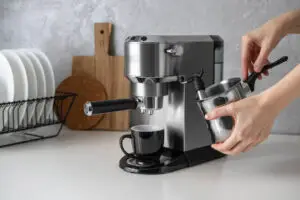
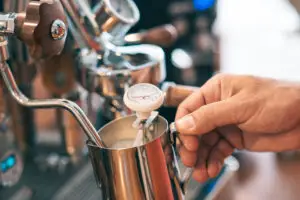
Coffee grinding can be the difference between a sweet cup of coffee and a bitter one poured from the same bag of beans. Inside whole coffee beans, the oils and aromatic compounds stay sealed away from air and water. Grinding breaks that seal. A french press, an espresso machine, and an automatic drip coffee maker each brew in a different way. When the size of the grind matches the method, the cup comes out sweet and full.
How Coffee Grinding Changes What You Taste
The flavour in a brewed cup comes from a process called extraction. It is the movement of flavour compounds out of ground beans and into water. The finer the grind, the faster those compounds dissolve out and the stronger the cup becomes. The coarser the pieces, the more time the same flavour from the beans needs to escape.
Over-extraction and under-extraction are both easy to taste. When too much flavour dissolves out, the cup will taste bitter and dry. When too little dissolves out, the same beans will taste sour and weak. With an even grind, every particle is close to one size and flavour dissolves out of all of them at the same pace. Coffee grinding comes down to particle size and how evenly you can repeat it.
Grinding Fresh Vs Pre-Ground
Freshly ground coffee and pre-ground coffee differ in a way you can smell before you taste anything. Once beans are ground, their aromatic compounds escape into the air and their oils begin to stale. Inside whole coffee beans, those same compounds stay sealed until the moment you brew coffee.
When you buy pre-ground coffee, the grinding happened at a factory long before the bag was opened. The convenience is genuine but some of that aroma escaped before the seal was ever broken. Grinding coffee at home just before brewing keeps that aroma in your cup.
Specialty coffee roasters print a roast date on their bags so you can tell fresh coffee from old stock before you buy. If a bag is months past that date, the lost aroma cannot be ground back into the beans at home. Coffee grinding at the last minute is one of the cheapest upgrades in the world of coffee. Every cup you make from the same bag will taste brighter for it.
Burr Grinders Vs Blade Grinders
Two types of coffee grinders are sold for home use. In a blade grinder, the beans are chopped by a spinning blade. The pieces are cut at random and the result is dust mixed with chunks rather than an even grind.
In a burr coffee grinder, the beans are crushed between two ridged surfaces so that every particle comes out close to the same size. When you change the grind setting, the burrs move closer together or further apart and the coffee grind size changes with them.
A blade model costs less. With a burr model, you can choose the right grind for each brew method and you can repeat it tomorrow. Burrs are fitted to hand-cranked models and to electric coffee grinders alike. For consistent coffee grinding, the burr type is the one to buy as your first grinder at home.
When to Use a Fine Grind Size

A finer grind suits quick brew methods, such as espresso. During brewing, hot water is forced through a compacted bed of finely ground coffee in well under a minute. The grind for espresso has to be fine so that enough flavour dissolves out in that short contact time.
Turkish coffee is brewed with an extra fine grind closer to flour than to sand. The grounds stay in the cup instead of being filtered out. The powder has to be fine enough to settle at the bottom without any grit. Coffee grinding at that level is beyond a blade grinder and beyond some burr models too.
Medium Grind Coffees
A medium grind is close to table salt in texture. It suits drip coffee makers and manual pour-over brewing. It is also the safe choice when you make coffee on an unfamiliar machine.
Medium also suits a stovetop moka pot. If the powder is packed too fine, steam pressure rises inside the pot and the coffee comes through scorched and harsh. With a slightly coarser setting, the brew passes through gently and the flavour stays sweet.
Coffee grinding for these brewers is a good place to learn what happens when you adjust the grind. If your automatic drip coffee comes out bitter, move one step coarser. If it comes out sour or weak, move one step finer. Keep the amount of coffee and the water the same while you test.
Coarse Grinding for Coffee Beans

A coarser grind suits a french press. Australians also know this brewer as a coffee plunger. You pour hot water over the grounds, wait around four minutes, and press the filter down. Flavour dissolves out of large particles slowly.
Cold brew is made with the coarsest setting of all. The grounds steep in cold water overnight. Even after that long soak, flavour dissolves out of such large pieces too slowly for the cup to become bitter. If a fine grind were used instead, the same soak would leave a bitter cup full of sediment.
Enrol in Coffee Making Training
Grind sizes are easier to learn by taste than by theory. Once you have tried a fine grind and a coarse grind of the same bean side by side, the difference will stay with you. In our coffee making training, you will brew the same bean at several settings and compare the results. Every espresso, latte, and long black depends on the coffee grinding that came before it. You will make better coffee at home or be ready to work in a café. If you are chasing the best coffee your kitchen can make, enrol in coffee making training and learn to grind for the cup you actually want.
FAQs
Do Espresso Machines Need A Dedicated Grinder?
Some entry-level espresso machines are built to brew acceptable shots from pre-ground coffee. Machines aimed at true espresso depend on a burr grinder with fine adjustment steps. If your budget covers only one upgrade, spend it on the grinder rather than the machine.
How Should Ground Coffee Be Stored?
Ground coffee keeps best in an airtight container in a cool, dark cupboard. A fridge is a poor spot for it, since moisture and food smells get into the container every time it is opened. Whatever the container, the flavour will fade faster than in whole beans stored the same way.
How Long Do Whole Coffee Beans Stay Fresh?
Roasted beans taste best in the first weeks after roasting, which is why a roast date is printed on specialty coffee bags rather than only a best-before date. Sealed and kept away from heat and light, whole beans will stay usable far longer than ground coffee.